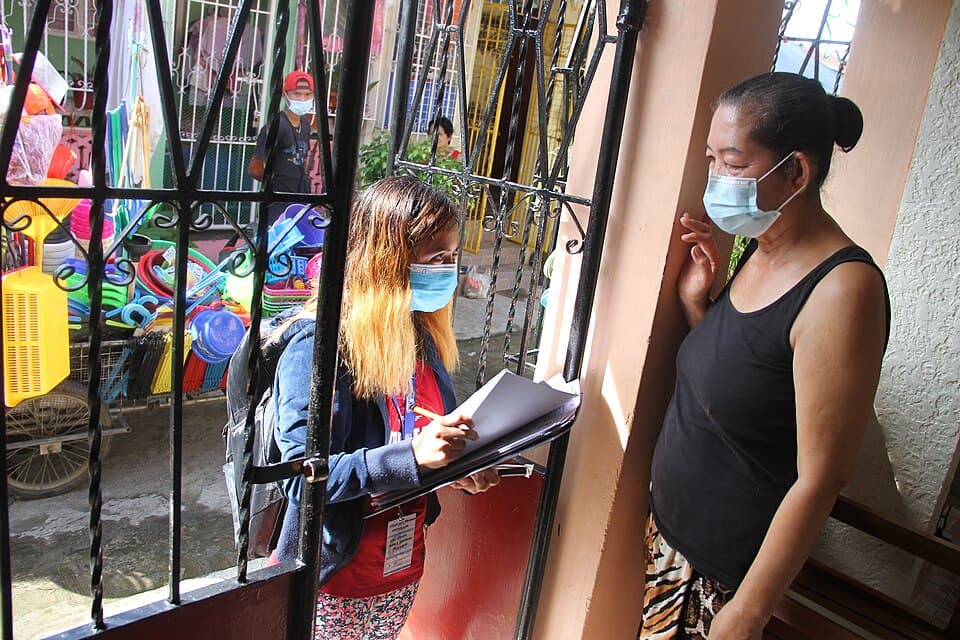

Bislig has 24 barangays, but its people are far from evenly spread among them. The barangay-by-barangay figures from the 2020 Census of Population and Housing, compiled by PhilAtlas from Philippine Statistics Authority (PSA) data, show a city where three barangays hold most of the population and one of the biggest was actually getting smaller.
Three barangays, more than half the city
In the 2020 census, Bislig had 99,290 residents. Of those:
- Mangagoy: 30,541 (30.76%)
- Tabon: 13,560 (13.66%)
- Poblacion: 10,844 (10.92%)
Together these three account for 54,945 people, or about 55% of the city. The next largest, San Roque with 6,562 and San Jose with 4,785, are less than half the size of Poblacion.
At the other end are five barangays with fewer than 1,000 residents each: Pamanlinan (701), Bucto (831), Caguyao (866), Sibaroy (931) and Santa Cruz (951). Mangagoy alone has about 43 times as many people as Pamanlinan.
The surprise: Mangagoy got smaller
Mangagoy is Bislig's commercial center, PICOP's old company town, and the largest barangay in all of Surigao del Sur. Even so, the census recorded a drop. Its population went from 32,464 in 2015 to 30,541 in 2020, a loss of 1,923 people, or 5.92%.
Only one other barangay shrank in that period. Pamanlinan fell from 784 to 701, a drop of 10.59%, the steepest in the city.
Every other barangay grew. The four fastest-growing were all smaller communities:
- Bucto: up 24.03%, from 670 to 831
- San Fernando: up 23.15%, from 2,371 to 2,920
- Sibaroy: up 22.66%, from 759 to 931
- Lawigan: up 20.70%, from 1,140 to 1,376
Poblacion also grew strongly, by 14.42%, from 9,477 to 10,844.
What the numbers add up to
For the city as a whole, population rose from 94,535 in 2015 to 99,290 in 2020, an increase of 5.03%. Take Mangagoy out of the count and the rest of Bislig grew from 62,071 to 68,749, or about 10.8%, more than twice the citywide rate.
The census figures show where people were counted. They do not explain why. The PSA data does not say whether former Mangagoy residents moved to other Bislig barangays, left the city, or whether household sizes simply got smaller. Readers should be careful not to read a single cause into the numbers.
Where the newer figures stand
The PSA's 2024 count put Bislig's total population at 99,872, a small rise from 2020. As of October 29, 2026, the barangay table on PhilAtlas still reflects the 2020 census, so it is not yet possible to say from that source whether Mangagoy's decline continued or reversed.
Why barangay population matters
Population is more than trivia. It is one of the factors used to compute each local government's share of national taxes, and it shapes how cities plan health centers, schools, water supply and garbage collection. A barangay like Mangagoy, with roughly a third of the city's residents in one place, faces very different pressures from a barangay of 700 people.
Sources: Philippine Statistics Authority, 2015 Census of Population and 2020 Census of Population and Housing, as compiled by PhilAtlas, "Bislig, Province of Surigao del Sur" (barangay population table); PSA 2024 Census of Population figure for Bislig City; Wikipedia, "Bislig."