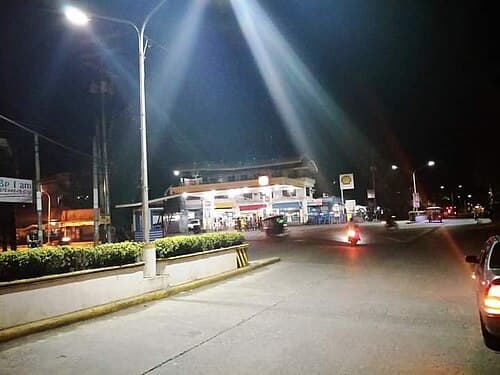

Every September 18, Bislig City marks Charter Day, the date the city officially became a city. But Bislig's story on the map goes back much further than that, and the two dates tell two different chapters.
Before it was a city, it was a town
Bislig was created as a town on January 1, 1921, through Executive Order No. 62, issued by Governor General Francis Burton Harrison. Primitivo A. Castillo served as the first Municipal President, with Sulpicio P. Laurente as Vice-President. For nearly 80 years, Bislig grew as a municipality, anchored by the timber and paper industry that would define much of its 20th century economy.
Becoming a city
On September 18, 2000, Bislig was converted into a component city through Republic Act No. 8804, ratified by plebiscite. That date is now Bislig City's Charter Day, and it is observed as a special non-working holiday under Republic Act No. 9683.
Where Bislig stands today
As of the 2024 census, Bislig City has 99,872 residents across 24 barangays and 24,348 households, a population density of about 301 people per square kilometer. The city covers 331.80 square kilometers, sits about 208 kilometers northeast of Davao City and 152 kilometers south of Tandag City, the provincial capital. It carries a 2nd class city income classification, with 2024 revenue of about ₱1.14 billion.
The city's official demonym is Bisliganon, and that identity, built from a 1921 executive order and a 2000 plebiscite, is what gets celebrated every September 18.
Bislig Today will cover this year's Charter Day activities as the official city calendar is released. Have details on this year's schedule? Send them our way.