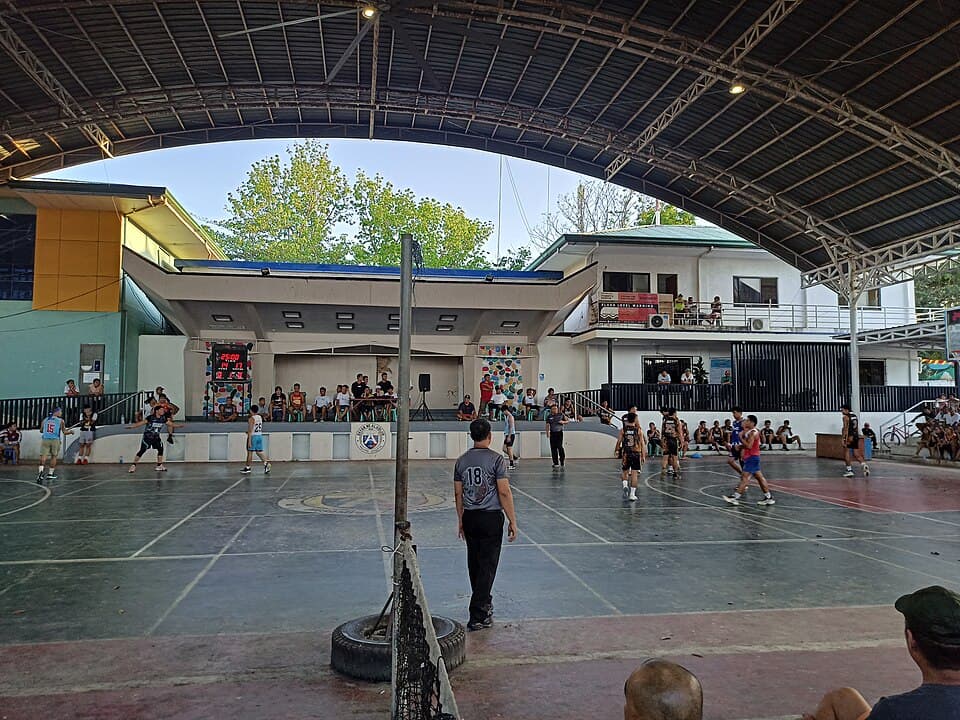

Bislig's city council wants minors off the city's basketball courts, gyms and other sports venues once curfew hours start. Two resolutions adopted on September 15, 2026, and published on the city government's website, address the issue from both sides: facility owners and the police.
What the council asked
Resolution No. 2026-765, authored by Councilor Alfredo J. Carmelo, requests "the operators, owners, and managers of sports facilities to strictly observe curfew hours for minors."
The resolution names "basketball courts, covered courts, gyms, recreational centers, and other similar establishments" as venues that host sports and community activities involving minors. It says that minors staying in these places late at night "may expose them to unnecessary risks and may affect their safety, welfare, health, education, and adequate rest."
It asks owners, managers and staff to "exercise reasonable supervision" and make sure minors are not allowed to stay in or use their facilities beyond the curfew hours set "by law or local ordinance." The council stressed that sports and recreation are good for young people, and that the curfew request is meant to "complement, and not replace" existing national laws, local ordinances and child protection policies.
Resolution No. 2026-769, adopted the same day, requests the Philippine National Police (PNP) Bislig City station "to strictly enforce curfew hours including sports facilities."
Neither resolution sets new curfew hours or penalties. A resolution is a request; it does not carry fines.
Curfew hours depend on the barangay
Curfew rules for minors in Bislig are largely set at the barangay level. In January, for example, the council reviewed Barangay Burboanan Ordinance No. 2025-05, which imposes curfew hours on minors aged 17 and below in that barangay. In Resolution No. 2026-090, adopted on January 27, 2026, the council affirmed the ordinance but cut the penalty for the third offense from P800 to P500, noting that Burboanan "is a small and not densely populated" barangay.
The published resolutions do not list the actual curfew hours in each barangay. Parents and facility operators should check with their barangay hall for the hours that apply to them.
What national law says
Any local curfew has to follow national law. Section 57-A of the Juvenile Justice and Welfare Act, as amended by Republic Act No. 10630 in 2013, covers curfew violations and other "status offenses." It says these ordinances "shall be for the protection of children" and that "no penalty shall be imposed on children for said violations."
Instead, a child found out past curfew is to be brought home or to a barangay official at the barangay hall and released to their parents. The child is recorded as a "child at risk," not a "child in conflict with the law." The law also requires such ordinances to provide intervention programs, such as counseling for the child and parenting seminars for parents. Where local curfew ordinances carry penalties, they fall on adults; Quezon City's ordinance, for example, provides penalties for parents and guardians.
The Supreme Court has also set limits. In an August 8, 2017 decision (G.R. No. 225442), it upheld Quezon City's 10 p.m. to 5 a.m. curfew for minors but struck down the curfew ordinances of Manila and Navotas. The court found that the Manila and Navotas rules restricted minors' rights too broadly, while Quezon City's list of exceptions was drawn narrowly enough to protect them.
What it means for court owners and players
If you run a covered court, gym or similar facility, expect the police and barangay officials to check that minors leave once curfew starts. For teenage players and their families, the safest move is to find out your barangay's curfew hours and plan late games around them.
Sources: City of Bislig, Sangguniang Panlungsod Resolution Nos. 2026-090 (January 27, 2026), 2026-765 and 2026-769 (September 15, 2026), published at bislig.gov.ph; Republic Act No. 10630, Section 11, via the Lawphil Project; Supreme Court of the Philippines, Samahan ng mga Progresibong Kabataan v. Quezon City, G.R. No. 225442 (August 8, 2017), as reported by PTV News.