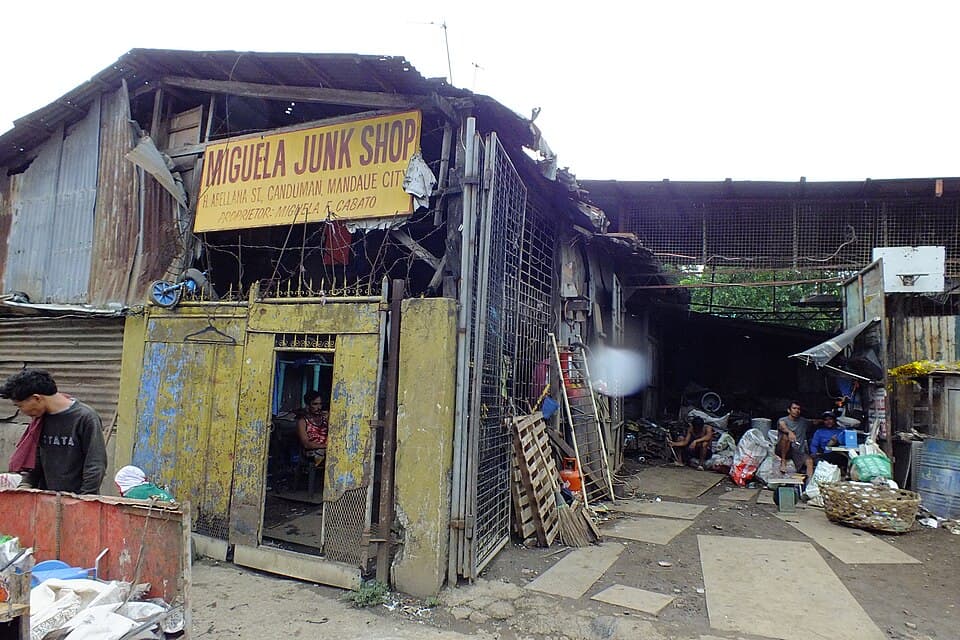

Bislig now has a dedicated law for junk shops and scrap buyers. City Ordinance No. 2026-14, briefly titled the "Recycling Center Ordinance of the City of Bislig," sets out what a recycling center needs before it can open, how it must keep records, where it may operate, and what it pays when it breaks the rules.
When it was passed
The Sangguniang Panlungsod enacted the ordinance on June 16, 2026, during its 48th regular session. Mayor Florencio C. Garay approved it on July 14, 2026. It was authored by Councilor Winston Y. Sia and sponsored by Councilors Bernadeth May R. Almanon-Balondo, Victor B. Alvar, Jr. and Reynaldo V. Dominguez, with Vice Mayor Conrad C. Cejoco. Under its own terms, it takes effect ten days after publication in a local newspaper.
In its whereas clauses, the council said recycling centers had multiplied along city streets, with scrap piled on roofs and frontages, sidewalks used as sorting areas, and customer vehicles and push carts blocking traffic.
Who it covers
The ordinance applies to anyone who buys, sells, stores or trades recyclable or scrap material in Bislig, including ambulant scrap buyers and dealers from outside the city. Shops that only sell working second-hand car parts are not covered, but those that also sell dismantled parts as scrap or by weight are.
What a recycling center needs
- A Locational Clearance and Zoning Certification from the Office of the Zoning Administrator, then a Business Permit. Centers without a permit can be ordered closed by the Mayor's Office.
- A permit tied to a maximum storage capacity based on the size of the lot, so stock does not spill into public space.
- A solid perimeter fence between 2 and 3 meters high, with all sorting, cutting and dismantling done inside the premises.
- Two transaction books, one for purchases and one for sales, recording names, IDs, dates and quantities. The books must be accredited by the PNP and kept for at least three years.
- Working CCTV covering entry and exit points, storage and transaction areas, with recordings kept for at least 30 days.
Operators must also report purchases of regulated materials (such as utility cables, street signs, drainage covers and cemetery or historical markers) to the PNP within 24 hours, and inform the PNP before loading scrap for transport.
Rules for street scrap buyers and outside dealers
Ambulant scrap buyers must register at City Hall every year, attend a half-day seminar on the Anti-Fencing Law and environmental protection, and get a city ID. The fee is P100. Scrap dealers coming from outside Bislig must register with the City Treasurer's Office and get a sticker or registration certificate, with their vehicles recorded.
Where they can operate
The ordinance prohibits or regulates recycling centers along the national highway and inter-town roads, on major thoroughfares and secondary roads, within 50 meters of any body of water, and in resettlement or housing areas (except material recovery facilities sanctioned by the CENRO). No new center may open in these areas. Existing permitted centers there may continue for a maximum of two years if they comply with the permit and fencing rules.
The fines
- Operating without a permit: P2,000, then P4,000, then P5,000, with possible confiscation of scrap and equipment.
- Breaking record-keeping or reporting duties: P5,000 for the first offense, and another P5,000 plus permanent permit revocation for the second.
- Unlawful transport of regulated scrap: P3,000 to P5,000 with vehicle impounding, and permit revocation on the third offense.
- Unregistered street scrap buyers: a warning first, then P200 or eight hours of community service.
- Unregistered outside dealers: P1,000, P3,000, then P5,000, with vehicle impounding.
Protections for operators
The ordinance also limits enforcers. Inspections should happen during business hours (6 a.m. to 7 p.m.), after-hours inspections require a court order, and no scrap can be seized without a valid court order. Licensed recycling centers in the city are also to be invited when the city government auctions off its own scrap.
Source: City of Bislig, Sangguniang Panlungsod Ordinance No. 2026-14 (enacted June 16, 2026; approved July 14, 2026), published on the city's Ordinances 2026 page at bislig.gov.ph.