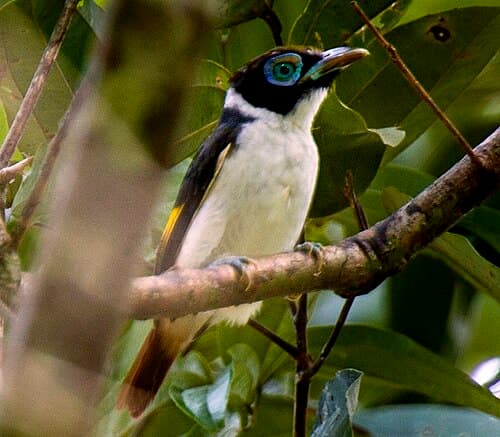

Bislig Today has already told the story of PICOP as the industrial giant that once ran the largest paper mill in Asia. What is less known locally is that the same stretch of forest, now largely cut over and informally settled, is considered one of the most important birdwatching sites in the entire Philippines, and has been drawing foreign birders to Bislig for more than three decades.
Why birders keep coming back
PICOP is the name birders use for a network of old logging roads and remaining forest patches straddling the border of Surigao del Sur and Agusan del Sur, radiating out from Bislig City. The forest holds one of the largest bird species lists of any single site in the country. Visiting birders regularly record over 100 species across a two-day trip, roughly half of them found nowhere else on Earth but the Philippines.
The site's reputation rests on a handful of exceptionally hard-to-see birds. The Mindanao Wattled Broadbill and the Azure-breasted Pitta, both found almost exclusively in Mindanao lowland forest, are considered signature PICOP species. Serious rarities that birders travel specifically hoping to glimpse include the Celestial Monarch, the Philippine Dwarf Kingfisher, the Southern Sooty Woodpecker, and the Blue-backed Parrot. More findable species recorded on recent trips include the Southern Rufous Hornbill (locally known as kalaw), the Blue-capped Kingfisher, the Mindanao Hornbill, the Philippine Frogmouth, and the Naked-faced Spiderhunter.
International birding tour operators, including outfits based in the United States and Europe, have run standing itineraries through PICOP for years, folding it into wider Mindanao trips built around chasing the island's endemic species. A trip report published by the Wild Bird Club of the Philippines this year, covering a January 2025 visit, documented more than 70 species over four days, working with local guides based out of Bislig's own Tourism Office.
A forest under pressure
The same reports that document PICOP's value describe a site in decline. What was once a single vast logging concession has fragmented since the Paper Industries Corporation of the Philippines wound down operations decades ago. Guides on recent trips have described encountering armed hunters and chainsaw operators inside the remaining forest, and informal settlement has continued to eat into the tree cover that the area's rarest birds depend on. Large-bodied species such as hornbills are especially exposed, since they are also targeted for bushmeat by local hunters.
Conservationists who track the site describe its future as genuinely uncertain. Some sections further from the road network are reportedly better monitored and holding up better than others, which is part of why local guides remain essential for anyone visiting, both for finding the birds and for navigating which areas are safe and accessible.
Why this matters for Bislig
Foreign birders visiting PICOP need local guides, transport, and lodging, all of which puts money directly into Bislig's tourism economy in a way that runs almost entirely under the radar compared to Tinuy-an Falls. It is also a reminder that the same land PICOP once cleared for pulpwood still carries ecological value most Bisliganon have never had a reason to think about.
Bislig Today could not independently verify current visitor numbers or the present condition of specific PICOP birding sites, since access and forest cover change from year to year. Readers who work with local birding guides or who have visited the site recently are welcome to share updates through our contact page.